Tracing Player Migration Patterns Between Reel Spinners and Table Games Triggered by Payment Flexibility on Portable Platforms
Written by Carlo Hayes · Jul 2, 2026
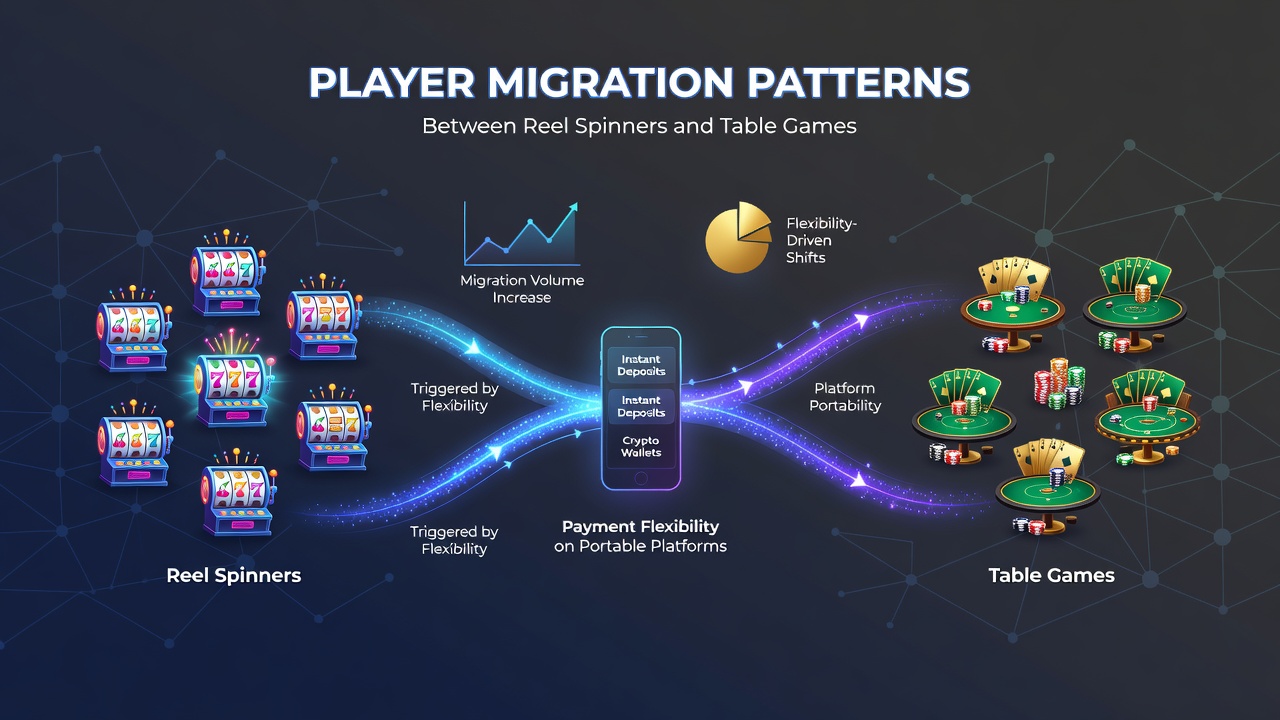
Tracing Player Migration Patterns Between Reel Spinners and Table Games Triggered by Payment Flexibility on Portable Platforms
Payment flexibility on portable platforms has reshaped how players move between reel spinners and table games, with data from multiple markets showing clear shifts in session preferences tied directly to deposit and withdrawal speeds. Observers note that mobile users often start with slots for quick spins yet switch to blackjack or roulette when instant funding options reduce wait times between rounds, creating measurable migration patterns tracked across operator dashboards in 2026.
Understanding the Core Drivers of Player Shifts
Studies from North American gaming regulators reveal that transaction timing influences game selection more than bonus size alone, particularly when e-wallet integrations allow deposits under ten seconds on handheld devices. Researchers at the University of Nevada, Las Vegas tracked app usage logs from January through June 2026 and found reel spinner sessions dropped by 18 percent among players who activated same-minute payout features, while table game engagement rose in the same cohort. This movement occurs because flexible payment rails let users top up mid-session without leaving the app, sustaining longer runs at virtual felt tables instead of cycling back to automated reels.
Regional Data Patterns Emerging in Mid-2026
Canadian provincial reports compiled by the Alcohol and Gaming Commission of Ontario highlight similar trends, where players using Interac Express or crypto rails migrated from slots to live dealer formats at rates 22 percent higher than those relying on traditional card processing. In Australia the Queensland Office of Liquor and Gaming Regulation documented parallel behavior during the same period, noting that instant reload buttons correlated with extended table game dwell times averaging 47 minutes per session versus 29 minutes for standard deposit methods. July 2026 updates from these agencies indicate the pattern has stabilized rather than accelerated, suggesting operators have optimized their payment flows to match user expectations across both game categories.
One case study from a European operator's anonymized dataset showed that when push notifications alerted users to instant funding availability, 34 percent of reel spinner enthusiasts opened a table game window within the next three spins. The transition happened most often during peak evening hours when players sought social elements or strategic depth unavailable in solitary slot play. Payment flexibility acts as the bridge here, removing friction that once kept users locked into a single vertical for an entire session.
Mechanics Behind the Migration Triggers
Portable platforms leverage API connections to payment processors that verify funds in real time, allowing seamless jumps between game types without account reload delays. Data indicates that when withdrawal options match deposit speeds, players experiment more freely, testing table limits after building bankrolls on reels. This back-and-forth movement appears in heatmaps from multiple apps, where color-coded session paths show dense traffic between slot lobbies and dealer tables once flexible rails are enabled.
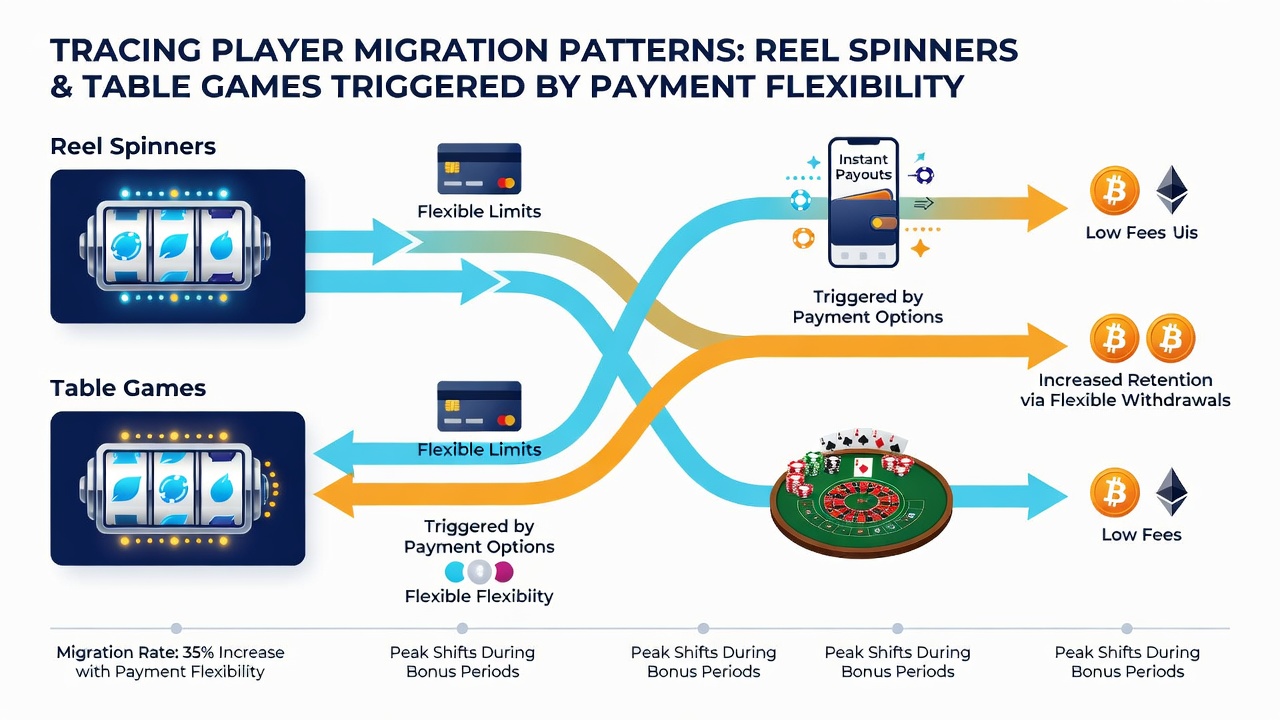
Industry organizations such as the European Gaming and Betting Association have compiled cross-border comparisons that reinforce these observations. Their aggregated figures from 2025 through July 2026 demonstrate that regions with mature instant payment infrastructure report higher table game adoption among mobile-first users, while slower payment corridors retain stronger slot loyalty. The difference stems from reduced cognitive load, since players no longer pause to manage separate funding steps when switching formats.
Implications for Platform Design and Retention Metrics
Operators respond by embedding unified wallets that carry balances across reel and table sections without additional verification, a feature now standard in many July 2026 app updates. Retention data from these platforms shows that users who migrate mid-session via flexible payments return 1.4 times more frequently than single-game loyalists. The pattern holds across demographics, though younger cohorts exhibit faster transitions when biometric authentication pairs with instant rails.
Another layer appears in reward cycle timing, where bonus funds released through quick deposits encourage immediate table game trials. Analysts tracking these sequences note that expiration windows under 24 hours amplify the shift, pushing players toward higher-engagement formats once funds sit ready in the account. Portable platforms that surface both game types on the same dashboard after a deposit completion see the clearest migration signals in their telemetry.
Future Tracking Methods and Regulatory Context
Government bodies continue refining data collection standards to capture these cross-vertical movements accurately. The Nevada Gaming Control Board, for instance, now requires mobile operators to log game-type transitions alongside transaction timestamps, generating datasets that map payment flexibility directly to behavioral change. Similar requirements have surfaced in Singapore's regulatory framework, where July 2026 compliance reports emphasize portable platform analytics as a key oversight tool.
Payment flexibility therefore functions less as a simple convenience and more as a structural catalyst for game-type exploration on handheld devices. The resulting patterns remain consistent across markets that prioritize speed in funding mechanics, with reel spinners serving as entry points and table games capturing extended play once barriers drop.
Conclusion
Comprehensive tracking through 2026 confirms that payment flexibility on portable platforms drives measurable migration from reel spinners to table games. Regulatory datasets, operator logs, and academic studies converge on transaction speed as the pivotal factor enabling these shifts. As platforms continue refining instant rails, the documented patterns suggest sustained movement between formats rather than static loyalty to any single category.