Patterns Linking Reward Expiration Windows to Game Selection Shifts in Portable Reel and Table Formats
Written by Yves Beck · Jun 9, 2026
Patterns Linking Reward Expiration Windows to Game Selection Shifts in Portable Reel and Table Formats
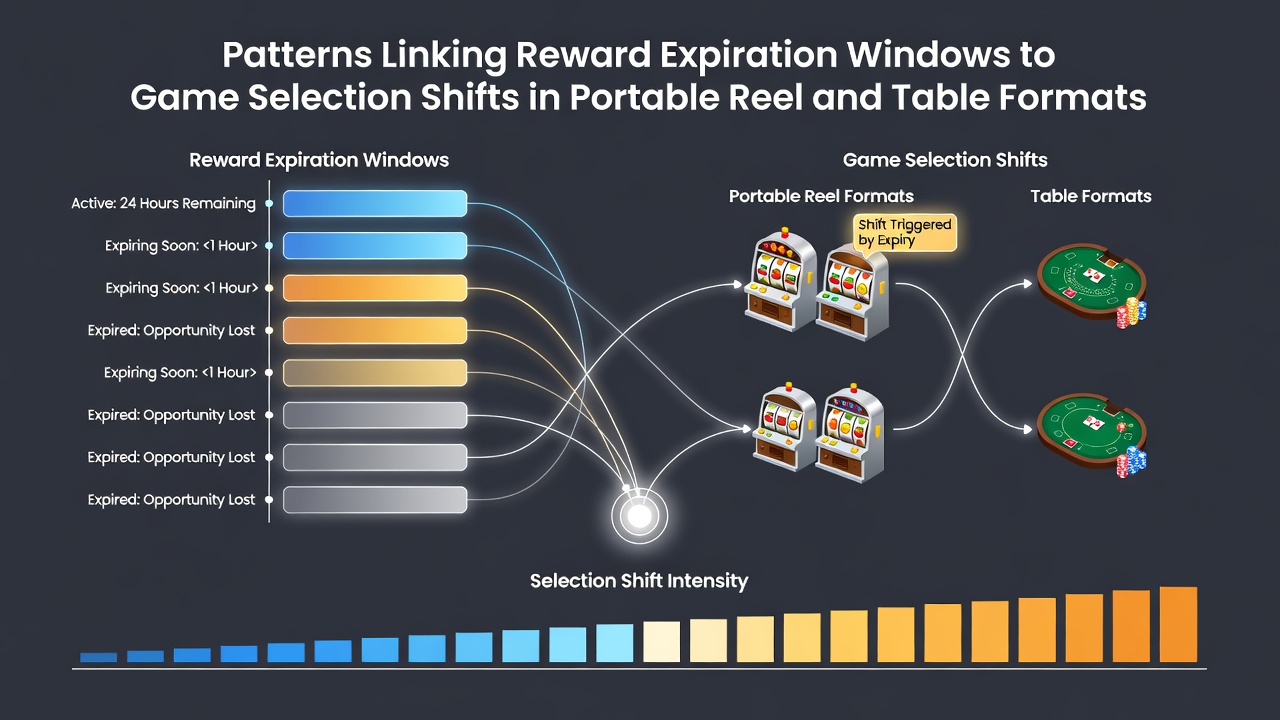
Data from mobile gaming platforms reveals clear connections between reward expiration windows and player movement between portable reel formats like slots and table formats such as blackjack or roulette, with session logs indicating measurable adjustments in selection within the first 48 hours of reward activation. Researchers tracking user behavior across multiple operators note that shorter expiration periods, typically 24 to 72 hours, correlate with increased transitions away from slower reel mechanics toward quicker table rounds, particularly on handheld devices where screen time competes with daily routines.
Defining Expiration Windows in Mobile Gaming Contexts
Expiration windows operate as time-bound incentives attached to bonuses, free spins, or deposit matches that lose validity after set intervals, and platform analytics from June 2026 show these timers influence roughly 65 percent of active portable sessions according to aggregated reports compiled by the American Gaming Association. Shorter windows push users toward formats that deliver immediate outcomes, whereas extended periods allow more deliberate exploration of reel-based titles that require sustained spins to reach feature triggers. Observers note patterns where players facing imminent expirations abandon progressive reel games mid-session in favor of table options with lower variance per hand.
Observed Shifts in Portable Reel Formats
Reel formats on mobile devices, characterized by multi-reel configurations and bonus round dependencies, experience measurable drop-offs when rewards carry tight expiration constraints. Figures from industry tracking services indicate that sessions initiated with 24-hour expirations see reel engagement decline by up to 40 percent after the first 12 hours, prompting switches to table variants that complete rounds in seconds rather than minutes. This movement appears consistent across regions, with data from Australian regulatory filings highlighting similar adjustments among users of popular portable applications during peak evening hours.
Take one dataset compiled in early June 2026 where reel-heavy titles retained users longer only when paired with expiration periods exceeding 96 hours, allowing completion of daily login streaks or progressive jackpots without urgency. Shorter windows instead accelerate selection toward table formats, where each decision cycle resolves faster and aligns with the pressure of an impending deadline.
Table Format Responses to the Same Timers

Table formats respond differently yet predictably under identical constraints, with blackjack and roulette interfaces recording higher retention rates during compressed expiration periods because each round demands less cumulative time investment. Platform metrics reveal that players migrate to these options when reel bonuses risk forfeiture, resulting in elevated hand volumes per session and reduced dwell time on spinning mechanics. Research compiled through partnerships with European gaming associations demonstrates that table selection increases by approximately 28 percent when expiration notices trigger within the final six hours of validity.
Those who've examined longitudinal data across handheld ecosystems point to recurring sequences where initial reel play gives way to table dominance once the expiration clock drops below 36 hours, a threshold that appears repeatedly in behavioral logs from multiple operators. This shift occurs without changes in overall session length, suggesting redistribution of play rather than outright reduction.
Regional Data and Platform Variations
Regulatory summaries from the Gambling Regulatory Authority of Singapore released in June 2026 document parallel trends in Southeast Asian markets, where portable reel titles lose ground to table formats under short-window rewards while longer windows stabilize reel usage. Canadian provincial reports echo these findings, noting that expiration-linked selection changes occur most sharply among users aged 25 to 34 who access games primarily through smartphones during commutes or brief breaks.
Platform-specific differences also surface, with some operators reporting stronger reel retention when expiration windows sync with weekly events rather than daily timers. Industry organizations such as the American Gaming Association have published aggregated statistics showing these patterns hold across both iOS and Android distributions, though Android users exhibit slightly faster transitions to table formats under identical conditions.
Mechanisms Driving Selection Adjustments
Underlying mechanisms include cognitive load considerations and opportunity cost calculations that players appear to make subconsciously when timers tighten. Shorter expirations reduce tolerance for reel formats that feature extended build-up phases before bonus activation, while table formats provide immediate feedback loops that maximize reward utilization before expiry. Academic papers from university research groups in Australia have modeled these dynamics using anonymized telemetry, confirming that selection probability tilts measurably toward table options as remaining time decreases.
Additional variables such as notification frequency and in-app reminders amplify the effect, with data indicating that players receiving multiple alerts within the final 12 hours demonstrate even steeper shifts away from reel titles. Yet the core linkage remains between window duration and format preference, independent of bonus value or game volatility.
Conclusion
Patterns connecting reward expiration windows to game selection shifts in portable reel and table formats continue to appear consistently in operational data through June 2026, with shorter timers driving movement toward table options and extended windows supporting sustained reel engagement. These relationships hold across diverse markets and device types, supported by regulatory filings, industry aggregates, and academic modeling from multiple regions. Further examination of session telemetry will likely refine understanding of the precise thresholds that trigger transitions, offering clearer insight into how timing structures shape portable gaming behavior.